

Be My Eyes
Bring Confidence to the Unseen
Be My Eyes is a leading assistive platform that connects blind and low-vision individuals with sighted volunteers and AI through real-time visual support. By bridging human connection and intelligent technology, the platform enables users to navigate everyday situations with greater autonomy.
This project was developed as part of the Creative Entrepreneur course in collaboration with a team of four. We focused on rethinking the product experience and designing a more cohesive and accessible system that supports users in moments that matter most.
Role
UX Designer
Researcher
Time
3 months
Sep – Dec 2025
Tool
Figma
Platforms
Mobile APP
Overview
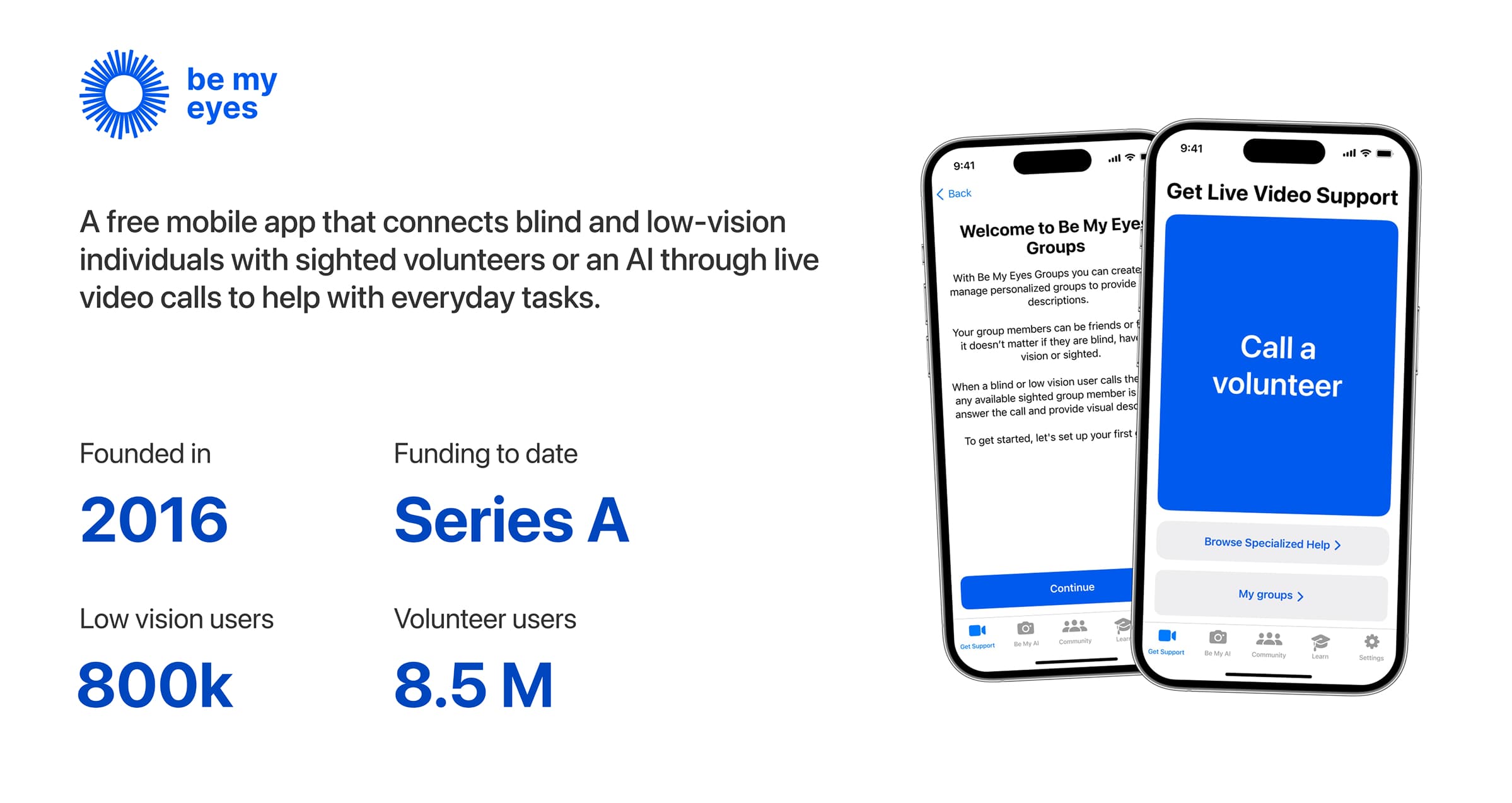
Be My Eyes connects blind and low-vision individuals with sighted volunteers and AI through real-time video support. Since 2016, it has grown into a global community of over 800,000 visually impaired users and 8.5 million volunteers.
We chose this project because accessibility is personal to us. Through family members and close connections living with vision impairments, we've seen firsthand how essential, yet often invisible, these tools are in daily life. Be My Eyes isn't just a utility; it's a bridge to independence. Our question was simple: how might it better support users in moments that matter most?
Challenges
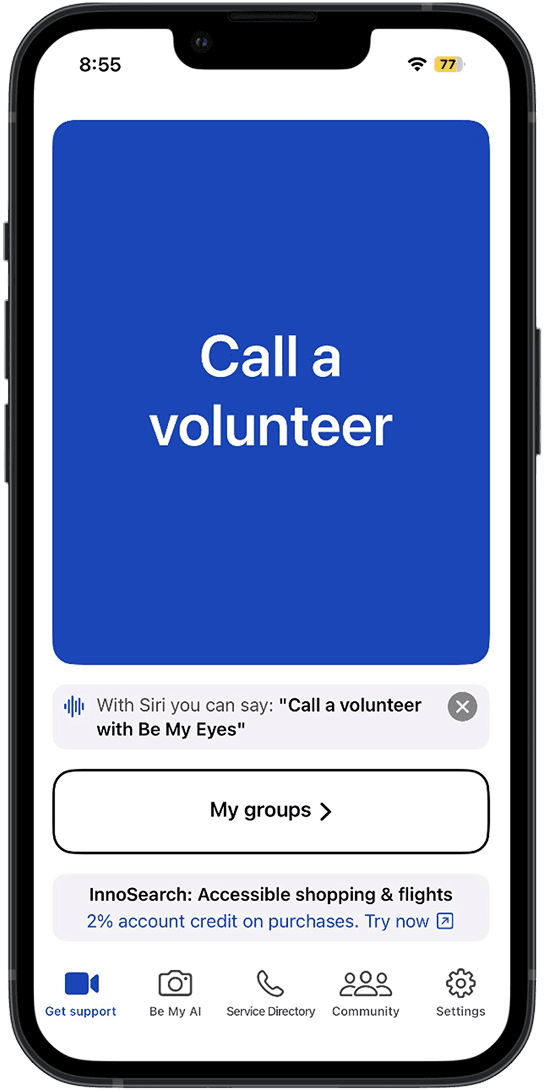
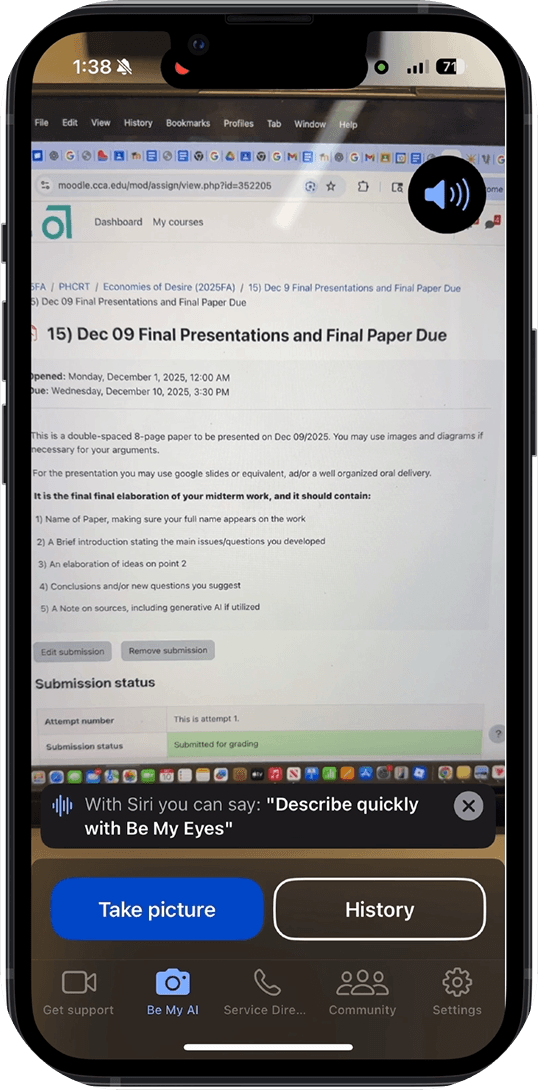
The current experience doesn't match the urgency and sensitivity of the tasks it supports. Critical features like "Call a Volunteer" and "Be My AI" are separated across multiple entry points, creating friction where speed should be everything.
Five tabs compete for attention in the navigation bar producing visual clutter and forcing users to constantly reorient themselves. Perhaps most telling: Be My AI has become the most frequently used feature, yet it remains structurally buried among those five options.
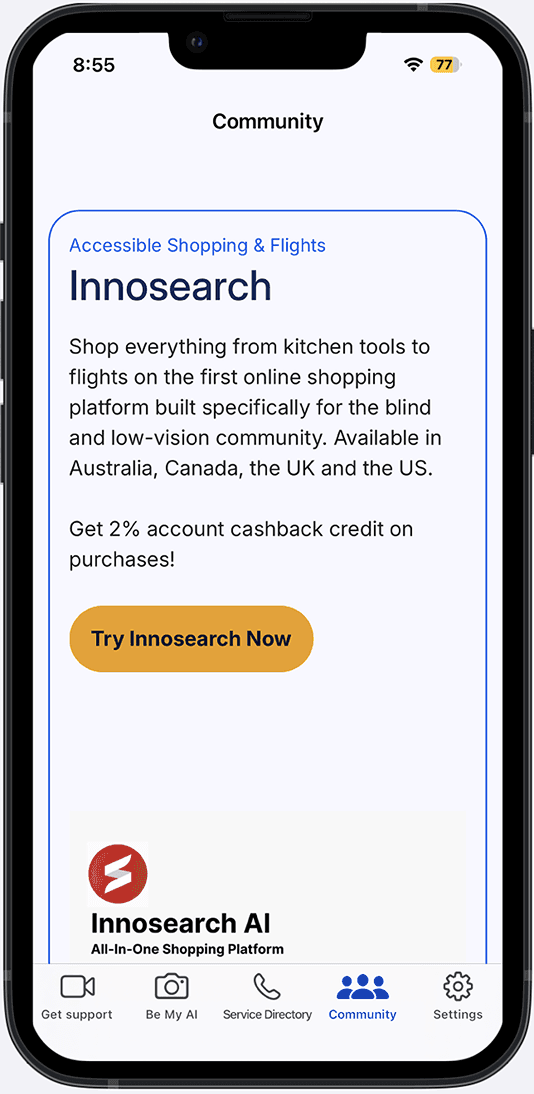
The community tab suffers from its own problems: poor information hierarchy, low discoverability, and a layout that feels isolating rather than inviting. Rather than fostering belonging, it reads as an afterthought, difficult to navigate, easy to abandon.
Key Insights
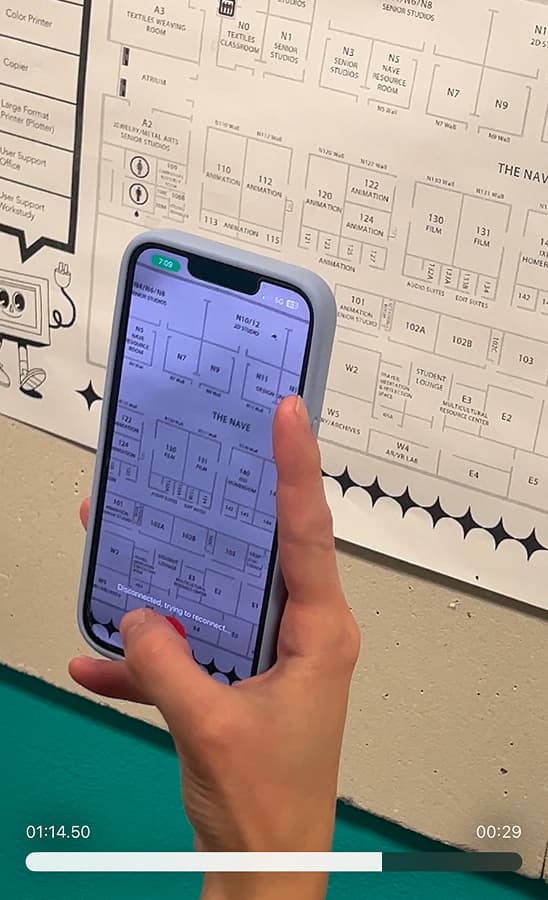
We combined direct conversations, field research, and hands-on testing to ground our decisions in real experience.
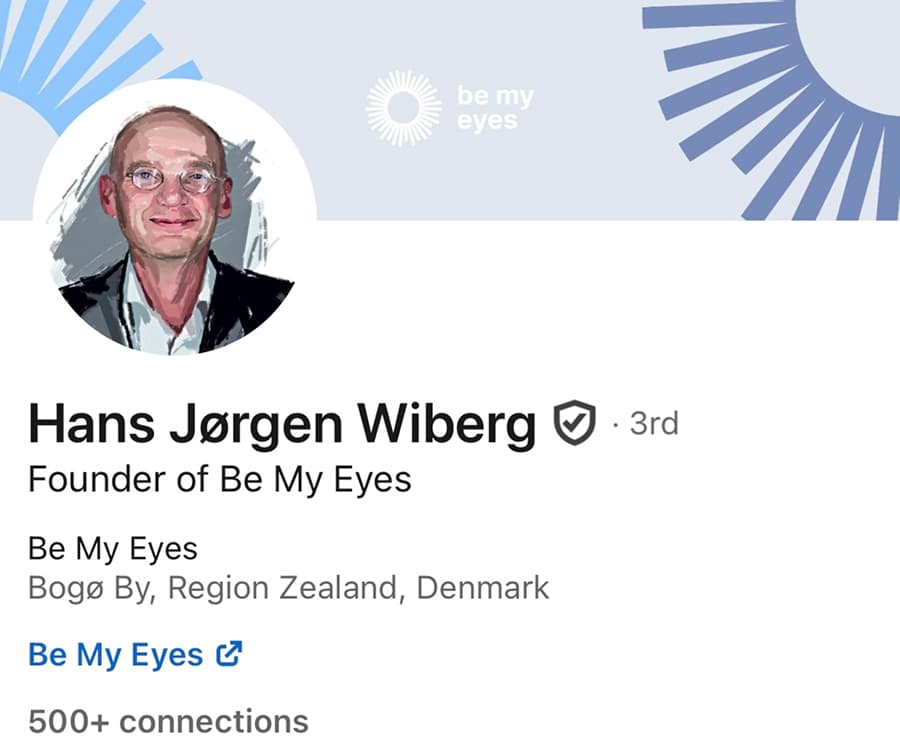
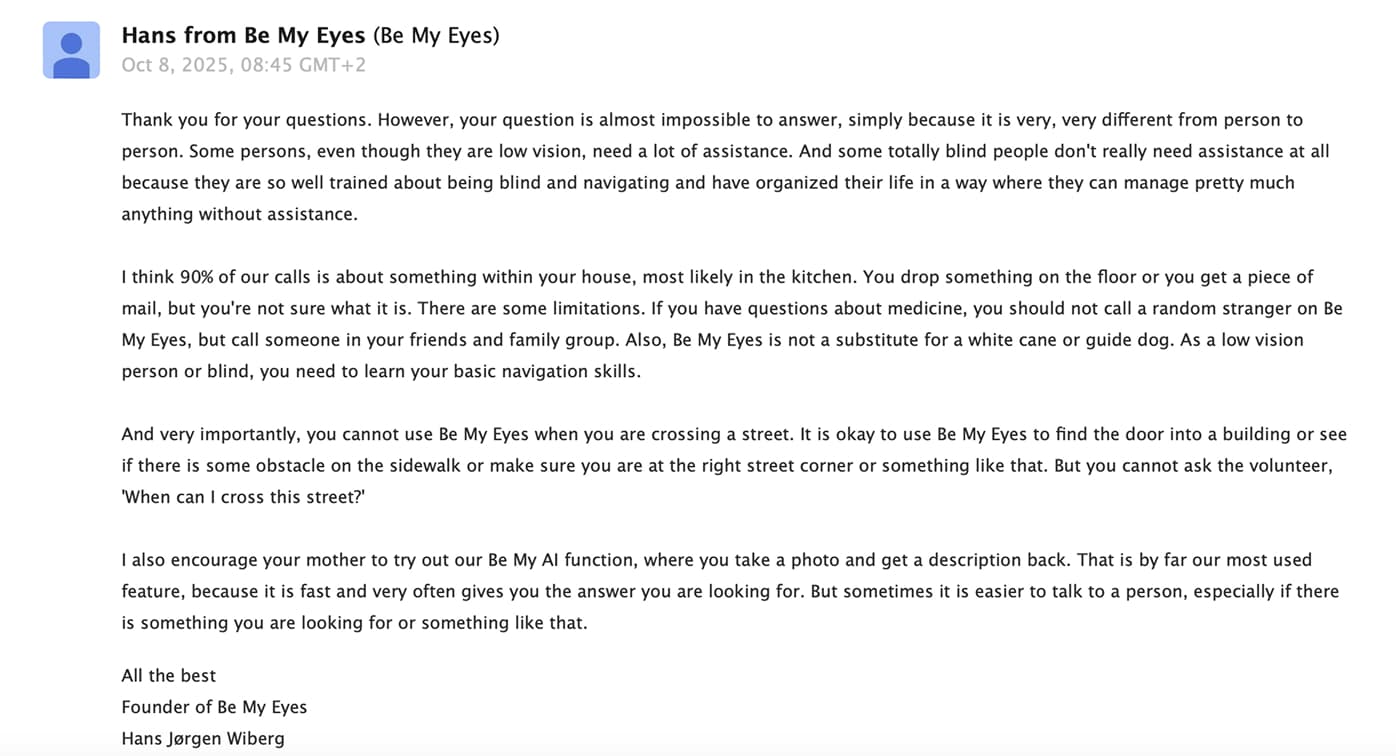
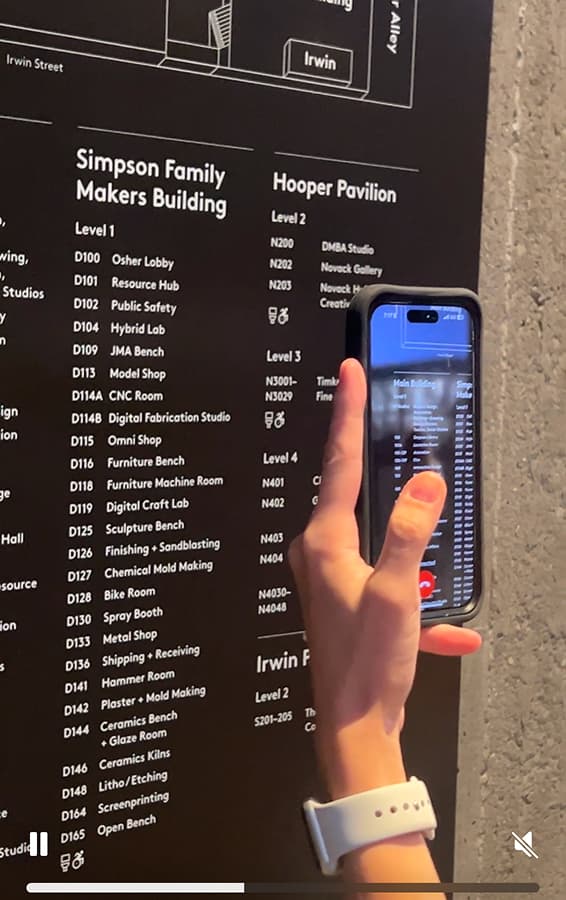
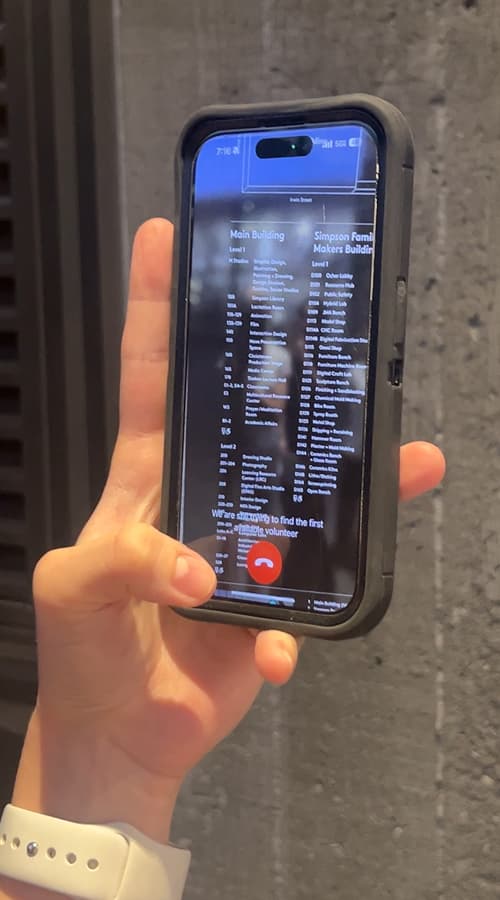
Speaking with the founder revealed that most interactions happen at home, reading labels, identifying objects, and that Be My AI has already surpassed volunteer calls in usage. Field research at LightHouse for the Blind and Visually Impaired in San Francisco deepened our understanding: accessibility isn't just about functionality, it's about confidence and trust.
We also role-played as both volunteers and visually impaired users, directly experiencing moments of confusion and delay. User interviews reinforced consistent principles: high-contrast readability, simplified navigation, predictable layouts, and a preference for conversational, human-like AI interactions.
Approach
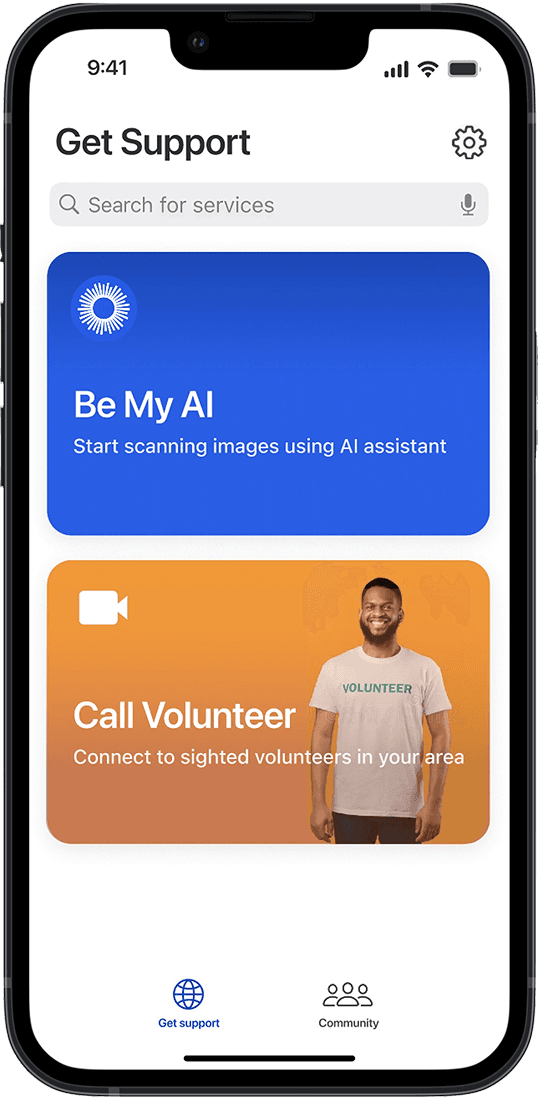
We reduced navigation to two tabs: Get Support and Community. Fewer decisions, faster access, less cognitive load.
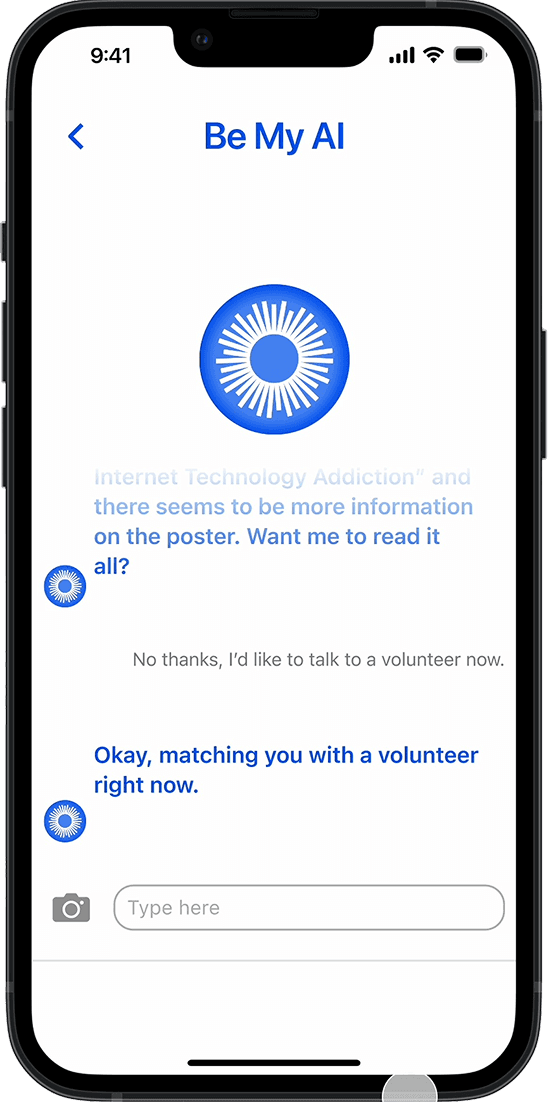
Within that structure, "Get Support" becomes a single, prioritized interface organized by usage frequency, with a search function to accelerate access. Be My AI moves to the center, no longer a tab among five, but a conversational assistant at the forefront of the experience, reflecting how people actually use the platform.
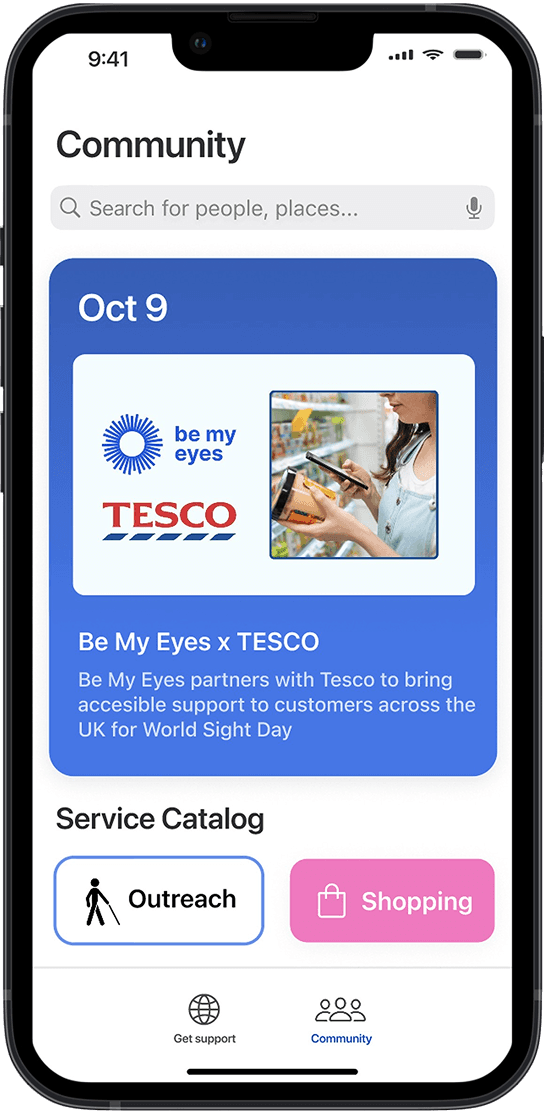
The community tab was rebuilt around discoverability: a search bar at the top, content sectioned by events, services, and community groups, and clearer visual hierarchy throughout. What was once easy to abandon now feels like a space worth returning to.
Throughout, we applied improved contrast, clearer hierarchy, and more predictable layouts, small decisions that collectively reduce clutter and build trust.
Outcome
This project pushed us beyond interface decisions toward a deeper question: what does accessibility actually mean in practice? We learned it's not about removing barriers alone. It's about reducing uncertainty and restoring confidence in everyday moments.
Prioritization turned out to be everything. Where a feature lives, how it's introduced, whether it feels immediate: these small structural choices have an outsized impact on a user's sense of independence.
We also came to see AI and human support not as competing models, but as complementary ones. The future lies in a hybrid where AI enhances speed while human connection preserves trust and empathy.
Our redesign doesn't aim to reinvent Be My Eyes. It aims to strengthen what it already stands for: independence, dignity, and human connection.